THE PLACE BEHIND THE FRUIT
A late-season origin.
A familiar Keitt.
Panzhihua gives our sourcing programme a late-season Chinese Keitt focus. Its appeal starts with the growing region and the timing; the right buying decision comes from the actual fruit and delivery plan.
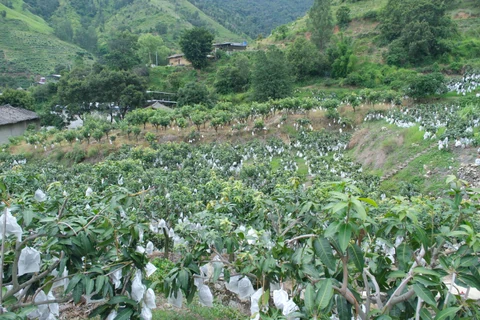
In southwestern China, Panzhihua’s mango-growing areas lie in the dry, hot Jinsha River valley. Keitt is among the mid- to late-season cultivars established there, as described by the Chinese Academy of Tropical Agricultural Sciences.
The 2017 Chinese Keitt variety record describes maturity in Panzhihua from late August to late September, extending to late October or early November at higher elevations. Our July–December sourcing programme is a company supply window; the origin and availability of each offered lot are set out in your quotation.
Place matters. People make it count.
We work directly with growers, then sort and pack in Sihui around the fruit and format your channel needs. That is how we bring our Panzhihua focus into a practical supply conversation.
Meet our programmeKeitt is grown in more than one country and region. A Panzhihua Keitt comparison with Huaping or Mexico can keep the cultivar the same. A comparison with Guiqi or Kent also involves a change of variety. Both can be useful buying choices, but they answer different questions.
01 / CHINESE ORIGINS
One country.
Different mango programmes.
For an overseas buyer, “Chinese mango” is a starting point. The growing area, cultivar and harvest plan make it specific. These four examples show where Panzhihua Keitt sits within that wider choice.
Scroll the table sideways when needed to read all three columns.
| Origin | Variety & growing context | What it means for a buyer |
|---|---|---|
| Panzhihua Sichuan | Keitt is our programme’s focus. Jinsha River valley growing conditions and autumn maturity are described in the variety record. | A Chinese Keitt option for a later-season buying plan. Match the selected orchard’s dates, fruit size and supply plan to your required arrival window. |
| Huaping Yunnan | Another Jinsha River valley area with late-season Keitt, supported by a local cultivar study. | A relevant same-variety Chinese comparison. There can be seasonal overlap with Panzhihua; compare the actual lots and schedules offered. |
| Hainan Sanya example | Tainong No. 1, Guifei and Jinhuang feature in a January 2026 industry notice published by Sanya’s agriculture bureau during its mango marketing season. | A winter-season example with a different cultivar mix. Establish which variety, county and harvest dates the supplier is offering. |
| Guangxi Baise example | Guiqi, also called Guire 82, is a distinct cultivar. Its breeding institute describes mid- to late-July maturity in Baise and Nanning. | A summer cultivar example. A Guiqi–Keitt comparison needs to consider your channel’s preference for size, flavour and handling as well as origin. |
These are representative programmes, not complete lists of what each region grows. Regional maturity and marketing dates are not an export arrival calendar. Site, cultivar, weather and orchard management affect timing.
Late-season Keitt is not exclusive to Panzhihua. Huaping also has documented late-season production. Panzhihua is the centre of our Keitt sourcing: we work directly with growers and prepare the fruit in Sihui around your channel’s requirements.
02 / INTERNATIONAL ORIGINS
A wider choice.
Start with the variety.
Mexico offers a useful international Keitt comparison. Peru’s Kent programmes illustrate a different kind of alternative: another mango cultivar that may serve the same retail or processing channel.
Scroll sideways when needed. Read the cultivar and market scope with each source.
| Origin | Documented cultivar context | What to compare with Panzhihua |
|---|---|---|
| Mexico Keitt | EMEX, the Mexican mango export packers’ association, lists Keitt and describes it as a late-season variety. | Keep Keitt as the cultivar, then compare lot size distribution, maturity, packing, shipment dates and the delivery route to your market. |
| Peru Kent example | APEM, Peru’s mango producers and exporters’ association, identifies Kent among the country’s export cultivars. | Kent is a different cultivar. Test whether its eating quality, size and preparation performance suit your channel; ask for the offered season and arrival plan separately. |
These sources establish cultivar context, not fixed monthly supply or delivery promises. The examples are not exhaustive: international mango programmes include other origins and cultivars.
Plan three dates, separately.
- Harvest
- When the offered fruit is picked at its actual growing location.
- Dispatch
- When the prepared order leaves the agreed facility or shipment point.
- Arrival
- When your team expects to receive it, with the route and handover arrangements included.
For either Chinese or international fruit, review the documents and import conditions for your destination with the parties handling the order. A regional reputation or a supplier registration does not by itself establish that a particular shipment can enter your market.
03 / COMPARE THE FRUIT
Let the lot
show you the difference.
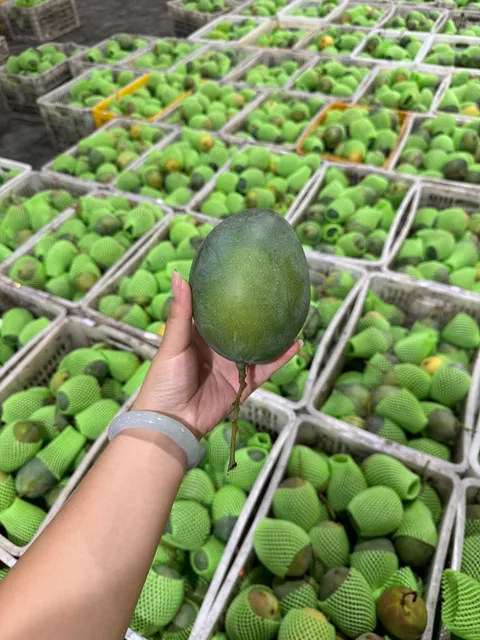
Keitt is generally described as a large, oval mango with firm, juicy flesh and limited fibres in the National Mango Board’s profile. Use these cultivar characteristics as a starting point, then assess the offered lot for the size, eating quality and handling performance your market needs.
Size that fits your channel
Compare individual fruit weight ranges and the distribution within a lot. Keep fruit count, net kilograms per pack and the pack format separate. Choose the sizes your retail, wholesale or processing operation can use.
Eating quality at a shared stage
Assess flavour, flesh texture, maturity and firmness at comparable stages. If using °Brix, keep the sampling and measurement method consistent and read the result with maturity and acidity. Skin colour alone is not a sweetness specification.
Performance after handling
Use agreed packing and storage conditions, an inspection point and the same acceptance criteria for a meaningful trial. Shelf life and fresh-cut yield need measured results; the growing-origin name cannot supply those numbers.
The UC Davis mango fact sheet provides general maturity and postharvest background. For your order, agree the sampling, condition limits and records with your supplier. If you buy for fresh-cut processing, use our whole-fruit trial guide to record usable yield under your own conditions.
04 / OUR PANZHIHUA PROGRAMME
From growers’ hands.
Prepared for your channel.
Good fruit begins with people. We source Keitt directly from growers in Panzhihua, Sichuan. Initial sorting starts at origin; detailed sorting, packing and pre-cooling take place at our Sihui facility in Guangdong.
Our July–December sourcing programme gives us a window to discuss your requirements. The quotation sets out the origin and supply dates for your chosen fruit, together with the size, quantity, packing and delivery arrangements.
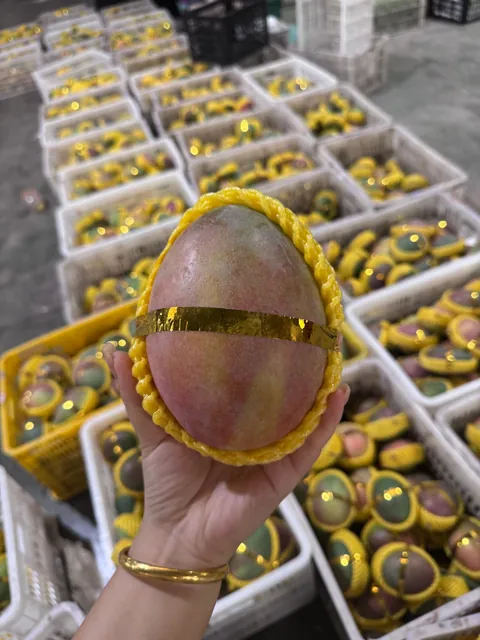
Green, Yellow and Rainbow are skin appearances of the same Keitt cultivar, shaped by orchard bagging and light exposure. Packing follows your intended use and requested kilograms per pack: crates, cartons, gift formats or foam boxes.
Explore our fruit & packingFollow the sourcing journey
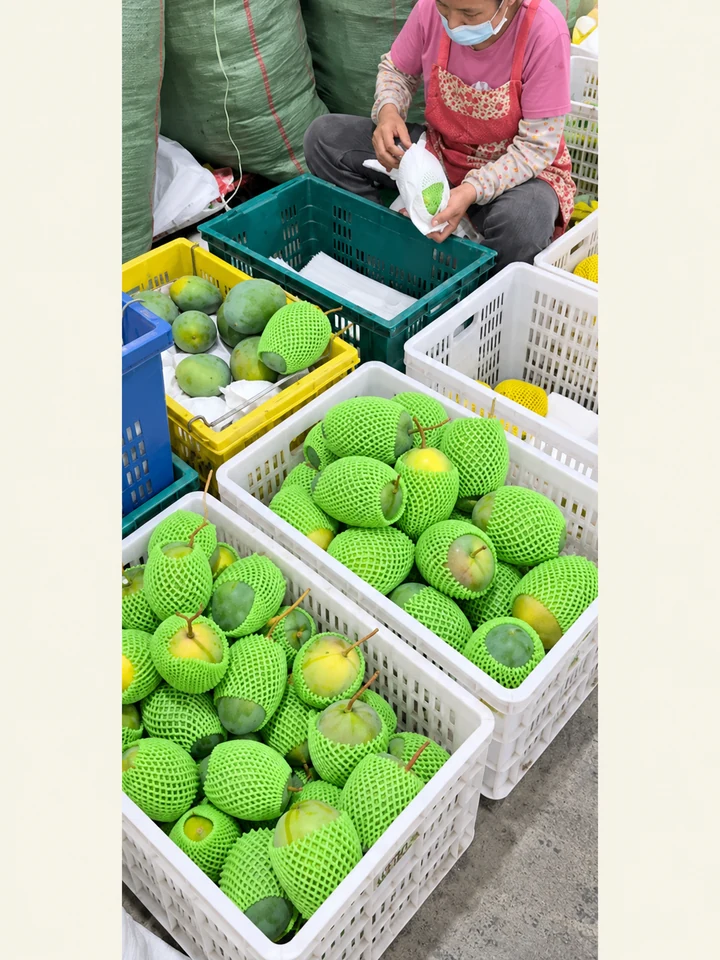
For importers and distributors, start with the arrival window, fruit size and bulk pack. For retail or gifting, discuss the appearance, count and presentation. For fresh-cut operations, we supply whole fruit for your own processing and evaluation.
05 / AFTER YOU SHORTLIST THE FRUIT
Compare the offer.
Keep the basis clear.
Once the variety and lot specification fit, compare the quoted cost at the same named point, in the same currency and on the same tax basis.
Quoted pack amount per net kg
Quoted pack price divided by confirmed net fruit kg in that pack
This retains services already included in the quote. It does not isolate a fruit-only price. Net fruit weight excludes the container and protective materials.
To reach a shared comparison point, add only confirmed buyer costs that are still needed and not already included. Allocate whole-order charges across the confirmed pack count before converting to a net-kilogram rate. Keep unresolved costs open; a blank amount is not zero. For an Incoterms® rule, record the version and named place with the agreed responsibilities. The cost comparison point may differ from the contractual handover or risk-transfer point. See the ICC’s official information.
OPTIONAL BUYING TOOL
Your offers, side by side.
The blank workbook records two offers and their cost scope. It is a quotation comparison tool, separate from the origin overview above.
Blank template · no live prices · no macros
Use one consistent pack format per offer. Order charges use an independently confirmed pack count; do not infer it from the 10-tonne commercial minimum. Mixed formats need separate comparisons or an aligned costing basis.
MAKE ROOM FOR PANZHIHUA KEITT
Your market.
Our next conversation.
Tell us your destination, required arrival window and total quantity, with the fruit size, preferred Keitt appearance and kilograms per pack. We’ll work through the available fruit and delivery scope with you, then prepare a written quote.
Commercial orders start at a total of 10 tonnes. View our commercial terms, or send a specification sheet to export@shinemango.com.
Request a quoteSources & scope
This guide compares representative growing and cultivar contexts. It does not rank origins on sweetness, shelf life, yield or price. SHINEMANGO programme information comes from our current business offer; order-specific commitments belong in the quotation.
- Chinese Academy of Tropical Agricultural Sciences, Panzhihua industry account — 26 October 2022; growing setting and regional cultivar background.
- China Tropical Crops Germplasm Resources Information Network, Keitt record — 2017 variety record; regional maturity and suitable growing areas.
- China Southern Fruit, Huaping cultivar study — 2013 research abstract; late-season Keitt context.
- Sanya Mango Association, marketing-season notice — 26 January 2026, published by Sanya’s agriculture bureau; named cultivars and seasonal context.
- Guangxi Subtropical Crops Research Institute, Guiqi cultivar account — undated page; cultivar identity and local maturity description.
- EMEX, Mexican mango varieties and APEM, Peruvian production and export context — undated industry association pages; cultivar examples.
- National Mango Board, Keitt profile — general cultivar characteristics and US-market context.
- UC Davis, Mango fact sheet — last updated February 1997; general maturity and postharvest background.
- ICC, Incoterms® 2020 — costs, risk and responsibility framework.
Sources accessed 4 October 2026. Harvest, dispatch and arrival are separate stages; regional descriptions do not establish a current lot’s supply or market eligibility.