

SHINEMANGO · YOUR QUESTIONS
Straight answers.
Before your first order.
Practical answers about our fresh Keitt, packing options and how to start working together.
Find your answer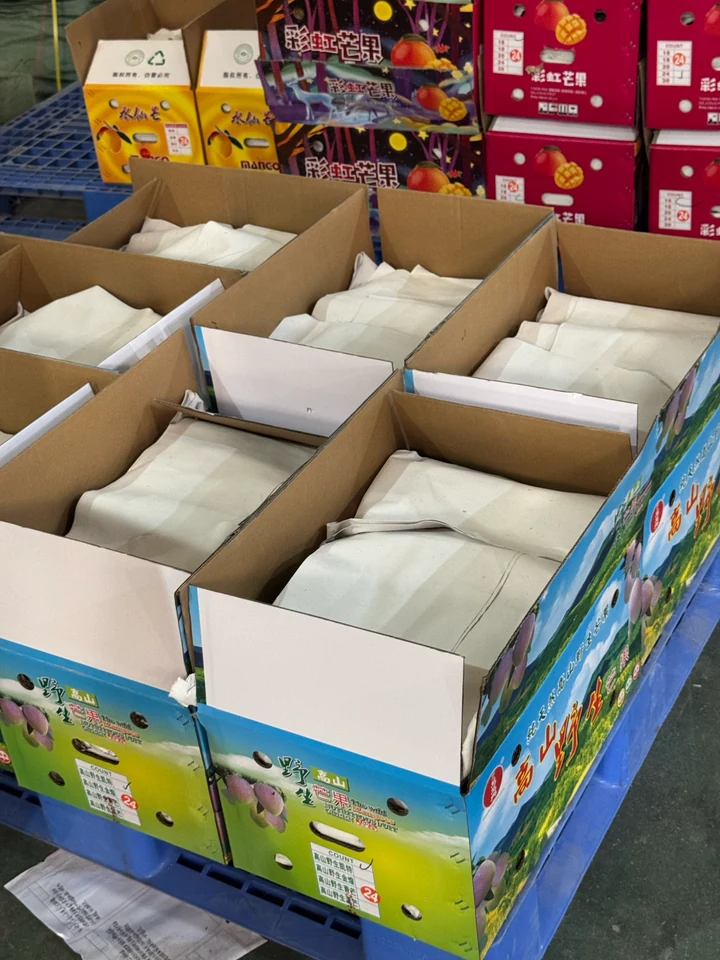
19 questions
Fruit & packing
The variety, the appearance and the format for your market.
What do you supply?
We supply fresh, whole Keitt mangoes for wholesale, retail and food preparation. Fresh-cut and foodservice customers receive whole fruit to prepare in their own operations; we do not supply ready-cut mango products.
Are Green, Yellow and Rainbow different mango varieties?
No. They are three skin appearances of the same Keitt variety. In our range, fruit bagging during growing and light exposure shape the colour. These names describe appearance rather than grades, sweetness levels or maturity specifications. Yellow fruit is typically covered with opaque red fruit bags that limit light. Rainbow fruit is covered with white bags and receives more light than Green Keitt.
Does green skin mean the fruit is unripe?
No. Keitt can remain green as it ripens, so skin colour alone does not establish ripeness. Discuss the maturity and firmness you need on arrival separately from your preferred appearance.
National Mango Board’s Keitt profile · Build your fruit specification.
When is Keitt available?
Our Panzhihua sourcing programme runs from July to December. Availability depends on the chosen fruit and order: the quotation sets out the growing origin and supply dates for your selection. Share your target arrival window so we can work through the timing with you.
Which packing formats can I choose?
We offer crate packing, including plastic crates, as well as boxes/cartons, gift boxes and foam boxes. The choice starts with how you sell or use the fruit and your preferred kilograms per pack. Crates are common for bulk supply; gift boxes or cartons can suit gifting. We discuss the actual container, protection and handling needs for the order.
Is every pack 15 kg with 18–24 mangoes?
No. A 15 kg plastic crate with 18–24 mangoes is a packing reference, not a fixed specification for every order or format. The quotation identifies the agreed weight, whether it is net fruit weight or includes packaging, the fruit count and the protective materials.
Can I specify fruit size, maturity and packing?
Yes. Share the fruit weight or count, receiving maturity, appearance criteria and packing you need. We use your brief to guide sourcing and selection, then set out the available specification in the quote. If you already have a specification sheet, you can email it to us.
Your first order
The details that help us start a clear buying conversation.
What is the minimum order (MOQ)?
Commercial orders start at a total of 10 tonnes. This is the order quantity, separate from the kilograms in each pack. The quote sets out the weight basis, selection and packing for the order. Sample arrangements are discussed separately.
What are the payment terms?
We require a 30% deposit, followed by the remaining 70% when the goods are ready. Dispatch follows receipt of the balance. The quotation and contract set out the currency, inspection arrangements and other order conditions.
Can we evaluate samples before ordering?
We can discuss whole-fruit samples for your evaluation. Availability, quantity, packing, delivery and costs depend on your destination and trial needs. Samples are arranged separately; commercial orders still start at 10 tonnes.
What information do you need for a quote?
Start with your name, company, email, destination or handover point, target arrival window and total tonnes. Add your preferred appearance, intended use and kilograms per pack if known. We handle enquiries in English, and you can email an existing specification sheet.
What happens after I send an enquiry?
We follow up using the contact details you shared, discuss the available fruit and order details, and prepare a written quotation once the requirements are agreed. An order is agreed separately through the quotation and order terms. If you are unsure whether the form was received, contact us before sending it again.
Handling & delivery
From growing origin to the handover agreed for your order.
Where is the fruit grown and handled?
For our Panzhihua programme, fruit is sourced directly from growers in Sichuan and receives an initial sort at origin. Detailed sorting, packing and pre-cooling take place in Sihui, Guangdong. Your quotation identifies the growing origin of the selected fruit; Sihui is the handling location.
Is the Panzhihua–Sihui journey refrigerated?
No. This domestic leg uses conventional, non-refrigerated trucks and usually takes 1–2 days. Pre-cooling takes place in Sihui. We agree the timing, inspection and onward transport arrangements for each order.
What should our quality team agree before shipment?
Start with fruit size, maturity, external and internal condition, packing and the inspection point. Together, we agree sampling and acceptance limits, then establish which supporting records can be supplied for the order. These details make the receiving expectations clear for both teams.
Which supplier information should we check?
Start with the company identity, growing and handling locations, and the registration and documents required for your destination. Our packing-house registration reference is 5170GC1056. Its current validity and scope need to be checked for the proposed order; the reference is not a guarantee of access to every market.
Can you arrange delivery for our market?
We assess delivery options for your destination and preferred handover point. The route, market requirements and support from relevant partners are considered before we agree the service scope, costs and responsibilities. The quotation sets out what is included for your order.
About SHINEMANGO
The people and principles behind the fruit.
Who is SHINEMANGO?
SHINEMANGO is our fresh-mango brand for professional buyers. We work with growers and organise detailed sorting, packing and pre-cooling in Sihui, Guangdong. Our company and the growing and handling locations are explained on the business page.
Why the name Shine?
Shine comes from growers’ smiles. It reflects our belief that good fruit begins with people: respect for growers, care for the fruit, and relationships with growers and buyers worth continuing, season after season.
Let’s talk about it.
Try another search term, or send us your question.